Blog quitting
How to Quit Zyn: Taper or Cold Turkey, Step by Step

You have decided. Maybe it is the gum spot that will not heal, maybe it is the money, maybe it is just being tired of a tin running your day. Whatever got you here, the next part is a plan, and a plan for quitting pouches is simpler than the internet makes it look.
Quick answer
Count your pouches for three days. Then either taper (cut total daily nicotine by about 10 to 20 percent a week, switching to a lower strength before cutting the count) or set a quit date and stop. Use nicotine gum or lozenges for the hard days, plan for days two and three, and call 1-800-QUIT-NOW for free coaching. Neither method beats the other; the one you follow wins.
Key takeaways
- Start with a three-day count of pouches and strengths. Every good plan is built on a real baseline, not a guess.
- Taper or cold turkey: a 2019 Cochrane review found no clear difference in quit rates, so pick the method that fits your habit and your personality.
- If you taper, cut strength before count, drop about 10 to 20 percent of your daily milligrams a week, and never step back up.
- Fast-acting nicotine replacement (gum, lozenge) is the tool the evidence supports for people who cut down, and it keeps the mouth habit busy.
- The first 72 hours decide most quits. Plan them like a trip: clear the calendar, stock the replacements, line up the help.
Step 1: Count before you cut
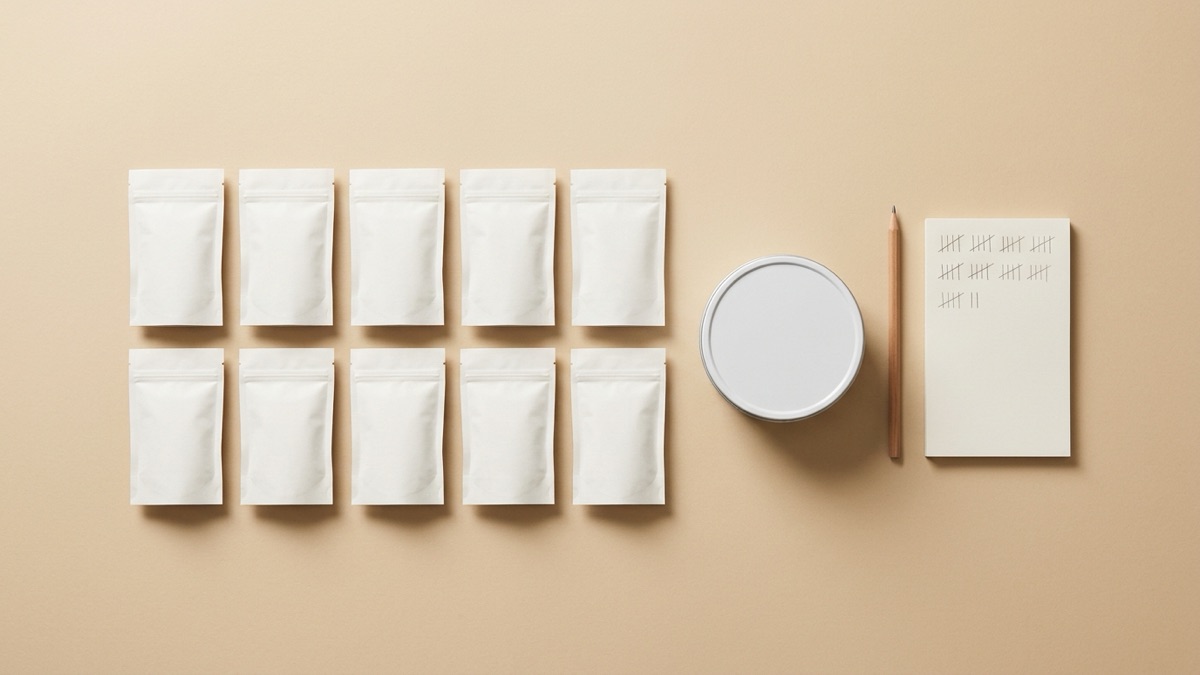
For three ordinary days, write down every pouch: the time, the strength, and what you were doing. A tally on the back of the tin works. So does a note on your phone. The LastPouch app, coming to Android first, will do it from a widget, but paper is fine.
You are looking for two numbers and one pattern. The numbers are pouches a day and total milligrams a day (ten 6 mg pouches is 60 mg; the mg math is simpler than it sounds). The pattern is your triggers: most logs show two or three moments doing most of the work, usually coffee, the drive, the desk after lunch, and the hour before bed.
Tip
Count the pouches you actually use, not the ones you think you use. The real number is usually a few higher than the one in your head. That is not a failing; it is why you count.
Step 2: Pick your method
There are two honest routes, and the evidence does not crown either.
The Cochrane Collaboration reviewed the question in 2019, pooling 22 studies with 9,219 participants, and found no clear difference in quit rates between people who cut down before quitting and people who stopped abruptly. The authors wrote that "neither approach resulted in superior quit rates." The review also found something useful for anyone who tapers: cutting down with the help of a fast-acting nicotine replacement (gum or a lozenge) or varenicline led to higher quit rates than cutting down alone. The studies were of smokers, so read across with care, but the logic travels.
| Route | Good when | Watch for | Typical length |
|---|---|---|---|
| Taper by strength, then by count | You use a lot (say 8 or more pouches a day), your brand sells lower strengths, you want a date you can plan around | Stretching past 12 weeks; holding a step so long it becomes the new normal | 6 to 10 weeks, then quit day |
| Cold turkey with a quit date | You use a little, you have tapered before and drifted, you want it done | Days 2 and 3; keep gum or a lozenge within reach | Quit day, then a few hard days, then a couple of hard weeks |
| Either, with nicotine replacement | Any time | Follow the label; ask a pharmacist about dose | Add a few weeks to step the NRT down |
A rule of thumb: if your daily total is already low (about 9 mg a day or less, which is three 3 mg pouches), you are where most tapers end, and stopping outright with gum on hand is usually simpler than an eight-week plan. If you are at 60 mg a day, a taper gives you a path that does not feel like a cliff. Our guides on the taper schedule and on quitting cold turkey go deep on each.

Step 3a: If you taper, do it this way
The taper that works has three rules, and they are the three rules people break.
- Cut strength before count. Keep your usual number of pouches and swap a few of them a week for the lower strength, so the habit (the count, the timing) stays exactly the same while the nicotine falls. Most people find that far easier than cutting pouches. Once the whole day is at the lowest strength you can buy, then cut the count.
- Drop about 10 to 20 percent of your daily milligrams each week. Faster tends to hurt; slower tends to drift. A worked example from 10 pouches of 6 mg (60 mg a day): week 1, six 6 mg plus four 3 mg (48 mg); week 2, three 6 mg plus seven 3 mg (39 mg); week 3, ten 3 mg (30 mg); week 4, eight 3 mg (24 mg); week 5, seven (21 mg); week 6, five (15 mg); week 7, four (12 mg); week 8, three 3 mg (9 mg); then quit day.
- Hold, never retreat. If a week is too hard, repeat it. Do not go back up a strength, because that resets the dependence you just worked off.
Set the quit date before you start and write it where you will see it. A taper without a fixed end becomes a slightly cheaper habit.
Try it
The free nicotine taper calculator builds this table from your own numbers, picks your quit date, prints on one sheet, and tells you plainly if your dose is already low enough that cold turkey is the simpler route. It also hands the plan to the cost calculator so you can watch the savings stack up.
Step 3b: If you go cold turkey, do it this way
Pick a quit date within the next two weeks, on a day with low stress and no drinking planned. Before it, finish your count, buy nicotine gum or lozenges, tell the people around you, and clear the first three days of anything optional. The night before, throw away every tin, including the one in the car. Then live the first 72 hours on purpose: symptoms peak within the first few days (NIDA) and the worst last a few days to a couple of weeks (smokefree.gov), so day three is the one to plan around. Our guide to the first 72 hours without nicotine pouches lays it out hour by hour.
Step 4: Use nicotine replacement well
Nicotine replacement therapy (NRT) means the patch, gum and lozenge you can buy over the counter, and the inhaler and nasal spray a doctor can prescribe. smokefree.gov says "research shows that NRT is safe and effective," that it reduces withdrawal and the urge to use by giving a small, controlled dose without the other chemicals in cigarettes, and that it "can more than double your chances of quitting."
For pouch users, gum and lozenges are a natural fit: same mouth habit, a known dose, and a printed plan for stepping down. Three honest notes. The labels are written for smokers, so ask a pharmacist, a doctor or the quitline about dose; this article will not pick one for you. NRT will not remove every urge; smokefree.gov says to combine it with a plan. And a nicotine pouch is not NRT: pouches are sold as tobacco products, and Truth Initiative says using them is "not a recommended way to quit nicotine in any form." If you are pregnant or breastfeeding, have a heart condition or take medication, talk to a doctor before starting NRT.
Step 5: Replace the habit, not just the nicotine
The lip habit outlives the chemistry. Give it a replacement before the craving arrives:
- Sugar-free gum or a mint for the mouth.
- A nicotine-free pouch, if the ritual itself is what you miss. Our guide to Zyn alternatives covers what those can and cannot do.
- Ice water with a straw for the hand-to-mouth loop.
- A walk for the restlessness. Both the CDC and smokefree.gov put physical activity first for cravings and jumpiness.
- Less coffee. The CDC notes caffeine stays in your body longer after you quit nicotine, so your usual amount can suddenly feel like too much.
Match each replacement to a trigger from your log. Coffee pouch becomes coffee plus gum. Commute pouch becomes commute plus a podcast and water. The pairing matters more than the product.

Step 6: Get the free help
Quitlines are free, in every state, at 1-800-QUIT-NOW (1-800-784-8669). The CDC describes what you get: a trained coach who helps you build a plan, tips for cravings and withdrawal, and in many cases free quit medicine or a two-week starter supply, or a connection to medicine through your insurance. The CDC says quitlines "are proven to increase your chances of quitting successfully and staying quit." Spanish speakers can call 1-855-DEJELO-YA. For texts, smokefree.gov sends daily messages for six to eight weeks when you text QUIT to 47848; when a craving is bad right now, text CRAVE to the same number.
Step 7: Write your slip rules before you need them
Most quits include a slip. The difference between a slip and a relapse is what happens in the next hour. Decide now: one pouch is a slip, so throw out the rest of the tin; write down the time, place and trigger; if you were tapering, go back to the step you were on, not to full strength; and tell one person, because shame is what turns a slip into a tin. Our guide to Zyn relapse rules has the full playbook.
What to expect after quit day
Cravings, restlessness, poor sleep and a short fuse arrive at your usual times in the first days, peak in the first few (NIDA), and the worst of it is over in a few days to a couple of weeks (smokefree.gov). By weeks three and four most symptoms have subsided and the danger is the quiet thought "I could have just one", which is the habit talking, not a fact. The full week-by-week picture is in our Zyn withdrawal symptoms and timeline guide.
Heads up
Nicotine withdrawal is unpleasant, not dangerous, for most healthy adults. Chest pain with shortness of breath, pain spreading to an arm or jaw, fainting, or thoughts of harming yourself are not withdrawal: call 911, or call or text 988 for a mental health crisis. Anyone pregnant, anyone with a heart condition or high blood pressure, and anyone with a history of depression or anxiety should plan their quit with a doctor.
Free help: call 1-800-QUIT-NOW or text QUIT to 47848. Nicotine replacement (patch, gum or lozenge, used as the label says) and a conversation with your doctor are reasonable options at any point in a quit.
The short version
Count for three days. Pick taper or cold turkey, knowing the evidence does not favor one. If you taper, cut strength before count, about 10 to 20 percent a week, and never climb back. Stock gum or lozenges, pair every trigger with a replacement, plan the first 72 hours, write your slip rules, and use the free coaching. Then keep counting the days, because that number is what eventually makes the tin feel like someone else's habit.
LastPouch guides are general information for adults 21 and over, not medical advice, diagnosis or treatment. Nicotine is addictive and no nicotine pouch is safe. Talk to a doctor, dentist or pharmacist about your own situation, especially if you are pregnant, have a heart condition or take medication. Free help: call 1-800-QUIT-NOW or text QUIT to 47848.
Questions people ask
Is it better to quit Zyn cold turkey or taper off?
The evidence does not favor one. A 2019 Cochrane review of 22 studies found no clear difference in quit rates between gradual reduction and abrupt quitting. Tapering suits heavy users who want smaller steps; cold turkey suits light users and people who drift when a plan is long. Fast-acting nicotine replacement helps either way.
How do I taper off Zyn?
Count your pouches for three days, then cut your total daily milligrams by about 10 to 20 percent a week. Switch to a lower strength (6 mg to 3 mg, for example) before you cut the number of pouches, hold any week that feels too hard, and never go back up a strength. Set a quit date at the end and keep it.
Can I use nicotine gum or lozenges to quit Zyn?
Yes, and they suit pouch users well because they keep the mouth habit while delivering a regulated dose. smokefree.gov says nicotine replacement therapy is safe and effective and can more than double your chances of quitting. Follow the label, and ask a pharmacist or the quitline about dose, since the labels are written for smokers.
How long does it take to quit Zyn?
The worst withdrawal lasts a few days to a couple of weeks according to smokefree.gov, and most symptoms subside within a few weeks according to NIDA. A taper adds the weeks of the step-down on top of that. Cravings can show up for longer but get weaker and rarer.
What if I slip and use a pouch after quitting?
One pouch is a slip, not a relapse. Throw out the rest, write down what happened and what triggered it, and get back to the plan the same day. If you were tapering, pick up where you were, not at full strength.
Where these facts come from
- Lindson et al., Cochrane Database of Systematic Reviews 2019: Smoking reduction interventions for smoking cessation (PubMed): pubmed.ncbi.nlm.nih.gov/31565800/
- smokefree.gov: Using Nicotine Replacement Therapy: smokefree.gov/tools-tips/how-to-quit/using-nicotine-replacement-therapy
- smokefree.gov: Understanding withdrawal: smokefree.gov/challenges-when-quitting/withdrawal/understanding-withdrawal
- CDC Tips: Quitlines and Other Quit Resources (reviewed September 27, 2024): www.cdc.gov/tobacco/campaign/tips/quit-smoking/quitline/index.html
- smokefree.gov: SmokefreeTXT: smokefree.gov/tools-tips/text-programs/quit-for-good/smokefreetxt
- Truth Initiative: Can oral nicotine pouches like Zyn help people quit vaping nicotine? (January 7, 2026): truthinitiative.org/research-resources/emerging-tobacco-products/can-oral-nicoti